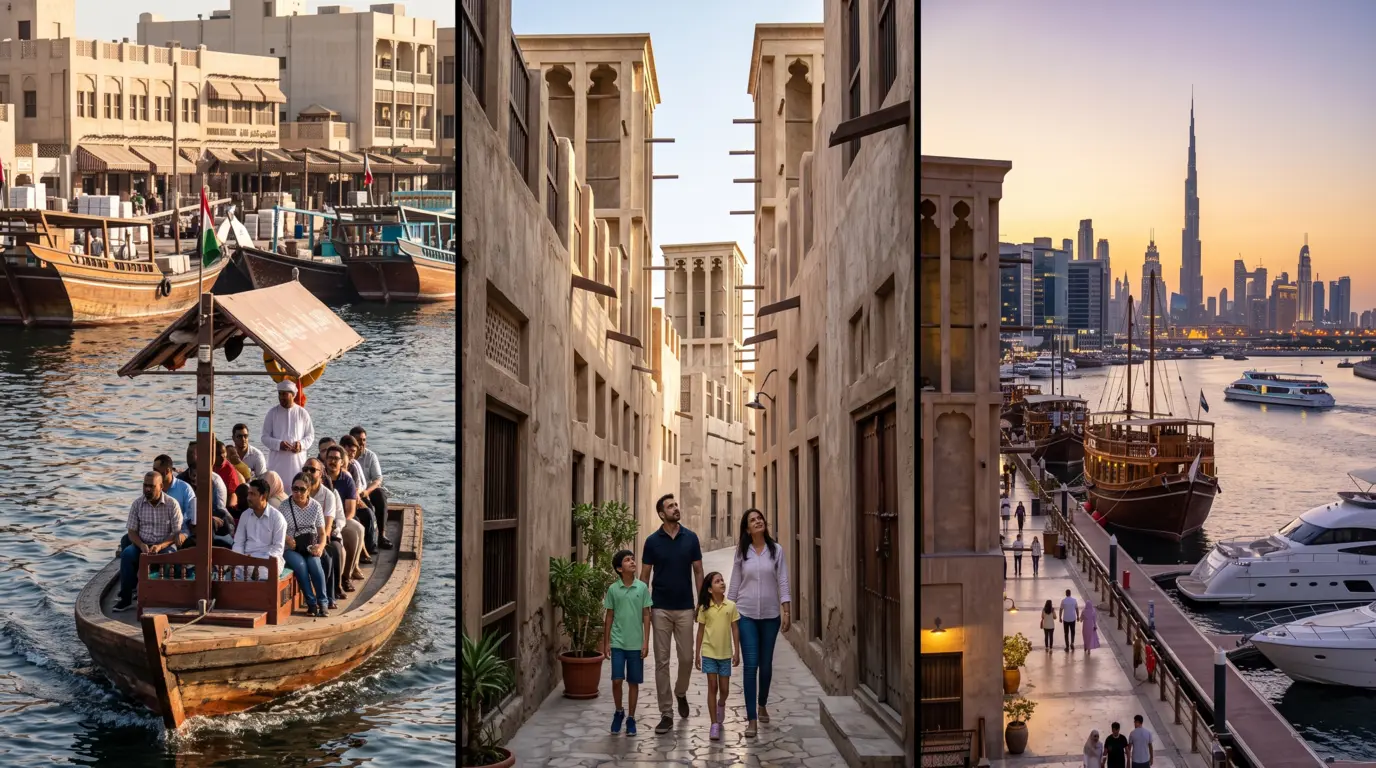
Quick Overview: Dubai Creek is a historic saltwater inlet dividing the city into two main districts: Deira and Bur Dubai. The best way to cross it is via a traditional wooden Abra (costing just 1 AED). The top unmissable activities include exploring the Al Fahidi Historical District, haggling at the Deira Spice Souk, and dining along the modern Al Seef waterfront.
Modern skyscrapers dominate the skyline today, but the soul of the city still lives along this ancient waterway. Long before the supercars and massive shopping malls, this inlet served as the primary port for pearl divers, fishermen, and textile merchants. If you are looking for the absolute best things to do in Dubai, stepping away from the glass towers to walk these historic docks is mandatory.
This is your ultimate Dubai Creek guide. We are stripping away the tourist traps to give you the exact routes, pricing, and on-the-ground realities you need to navigate the old city perfectly.
Navigating the Water: Abras, Ferries, and Private Charters
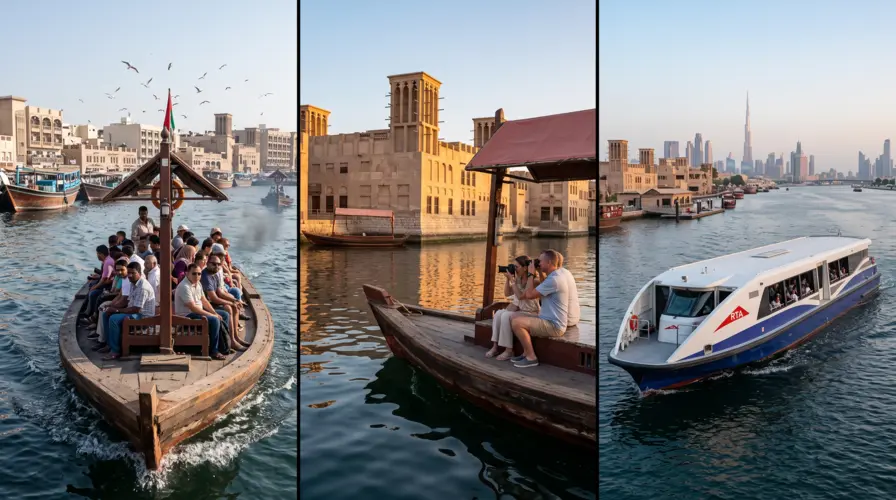
To travel across Dubai Creek, you have three primary options: a 1 AED public wooden Abra, a private Abra rental for roughly 120 AED per hour, or the air-conditioned Dubai Ferry. Public transport requires cash or a Nol card, while private charters offer bespoke routing.
Before looking at specific Dubai Creek places to visit, you need to understand how to move. The water itself is the main attraction. Traffic on the surrounding roads gets heavy, so the fastest and most scenic transit route is always on a boat.
Dubai Creek Water Transport Pricing & Timetables
| Transport Type | Route / Station | Average Cost (AED) | Operating Hours | Best For |
| Public Abra | Bur Dubai to Deira Old Souq | 1 AED (Cash only) | 6:00 AM – Midnight | Quick crossings, raw local experience |
| Private Abra | Custom Creek Routing | ~120 AED / hour | On Demand | Personalized tours, photography |
| Dubai Ferry | Al Ghubaiba to Dubai Marina | 50 AED (Silver) | Scheduled (Usually 1PM & 6PM) | Long-distance scenic transit |
| Luxury Yacht | Open Water / Marina | Varies by vessel | On Demand | High-end events, deep-sea comfort |
1. Catch an Abra Dubai Creek (Public Routes)
You haven’t experienced old Dubai Creek activities until you step onto a motorized wooden boat smelling of diesel and saltwater. A public Dubai Creek abra tour takes about five minutes to cross the water. You hand a single 1 AED coin directly to the driver. No tickets. No turnstiles. You sit on a central wooden bench, feeling the wake of passing dhows as seagulls circle overhead. It remains one of the most efficient and authentic transit methods in the Middle East.
2. Book a Private Tour of Dubai Creek
Don’t want to squeeze onto a crowded bench? Rent the entire boat. The private abra rental hour cost Dubai Creek operators charge hovers around 120 AED. You can negotiate this directly at the dock. A dedicated hour allows you to explore old town Dubai from the water at your own pace. You tell the driver when to stop, letting you photograph the wind towers glowing during golden hour.
However, Abras lack basic amenities and ride rough in choppy water. If you want a premium experience with catering, air-conditioning, and stable cruising, you should look into a standard yacht tour Dubai out in the open ocean. Reserving a private boat charter Dubai allows you to see the larger coastal landmarks without the noise and exhaust of the inner creek trading ships.
3. Take the Dubai Ferry from Al Ghubaiba
If you want to transition from the old world to the new, take the Dubai Ferry Ghubaiba route. The official Dubai ferry from Ghubaiba to Dubai Marina timetable usually features departures at 1:00 PM and 6:00 PM, though you should always verify live schedules with the RTA Official Marine Transport authority. The trip takes about 90 minutes. It offers incredible, unobstructed views of the coastline as you leave the heritage districts and sail toward the towering skyscrapers. Before you go, checking the yacht rental Dubai Marina price options can help you plan your luxury upgrade once you arrive in the modern district.
Exploring Old Dubai: Heritage, History & Architecture
Exploring the heritage side of the city means walking through 19th-century wind-tower architecture and discovering the city’s pearl-diving roots. You can access many restored sites for free, making this area highly accessible for culture seekers.
The southern side of the creek (Bur Dubai) holds the most concentrated history. Narrow alleyways, coral-stone buildings, and museums replace the glass facades you see elsewhere in the city.
4. Wander the Al Fahidi Historical District (Bastakiya)
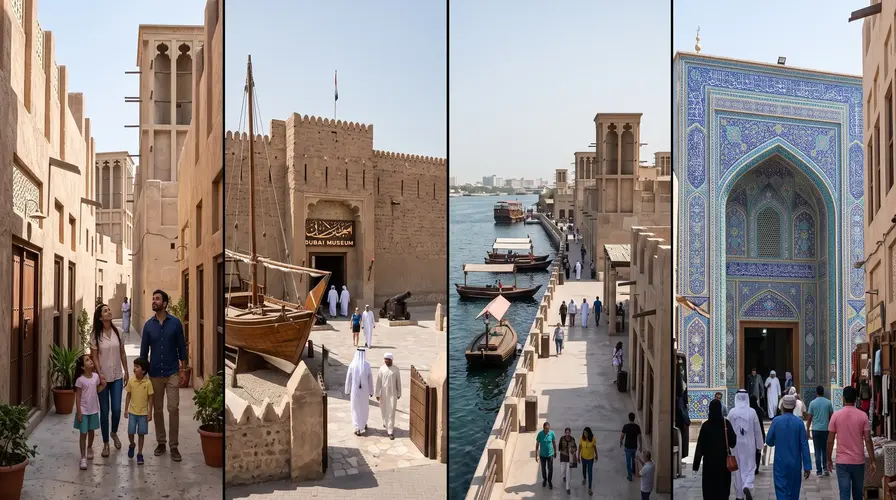
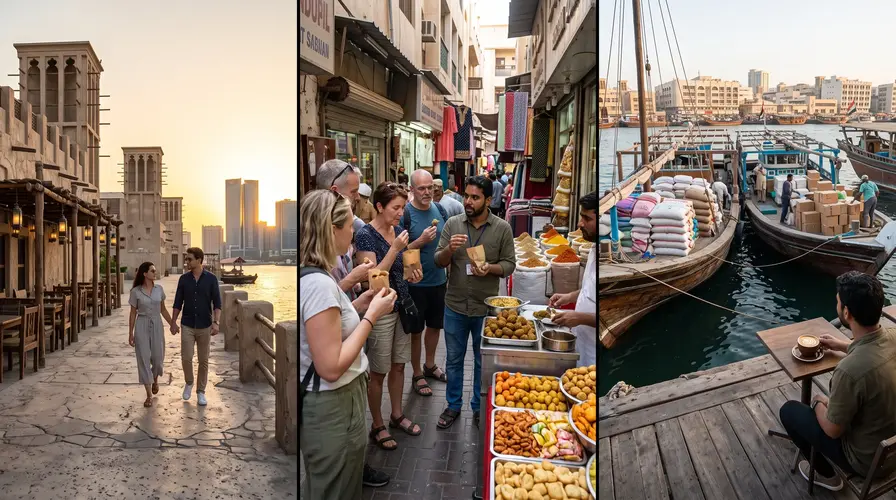
Walking through the Al Fahidi Historical District (formerly known as Bastakiya Dubai) feels like stepping back a century. Traditional wind towers (Barjeel) rise above narrow pedestrian lanes. These towers acted as ancient air conditioning, catching coastal breezes and funneling them down into the courtyards. Today, these restored coral-stone houses host art galleries, quiet cafes, and boutique craft shops. According to the Dubai Culture Authority, this area preserves the exact lifestyle of the mid-19th century. Because the alleys are pedestrian-only and completely shaded, it ranks among the best things to do in Dubai with kids for families wanting a safe, cultural afternoon walk.
5. Visit the Dubai Museum (Al Fahidi Fort)
Located at the edge of the historical neighborhood sits Al Fahidi Fort. Built in 1787, it is the oldest existing building in the city. The Dubai Museum inside traditionally showcases the rapid evolution from a pearl-diving village to a global metropolis using life-size dioramas and archaeological finds.
(Note: The museum frequently undergoes modernization and expansion phases in 2026, so check entry status before arriving).
6. Explore Shindagha Museum Heritage District
Further down the water sits the Shindagha Museum Heritage District. This massive open-air pavilion tells the story of the creek’s origins. You will find the Perfume House here, which details the complex extraction methods used to create traditional Emirati scents. Exploring the exterior grounds and walkways here ranks high on the list of free things to do in Dubai, as you can enjoy the traditional architecture and waterfront promenades without buying a ticket to every indoor exhibit.
7. Photograph the Ali Ibn Talib Mosque
While walking through the Bur Dubai side, you will encounter the Ali Ibn Talib Mosque. Unlike the massive sandstone structures found elsewhere in the city, this mosque features striking blue Iranian-style mosaic tiles. The intricate geometric patterns and vibrant colors create a brilliant contrast against the dusty, neutral tones of the surrounding souks. It is a working mosque, so respect prayer times, but the exterior provides incredible architectural photography.
The Creek Souks: Spices, Gold & Handcrafted Textiles
The Dubai Creek souks remain the trading heartbeat of the city. Expect to haggle heavily for gold bullion, frankincense, saffron, and pashmina shawls across the active Deira and Bur Dubai markets.
No Dubai Creek guide is complete without a deep dive into the markets. You cross the water to Deira for gold and spices. You stay on the Bur Dubai side for textiles and fabrics.
8. Cross to the Spice Souk Deira
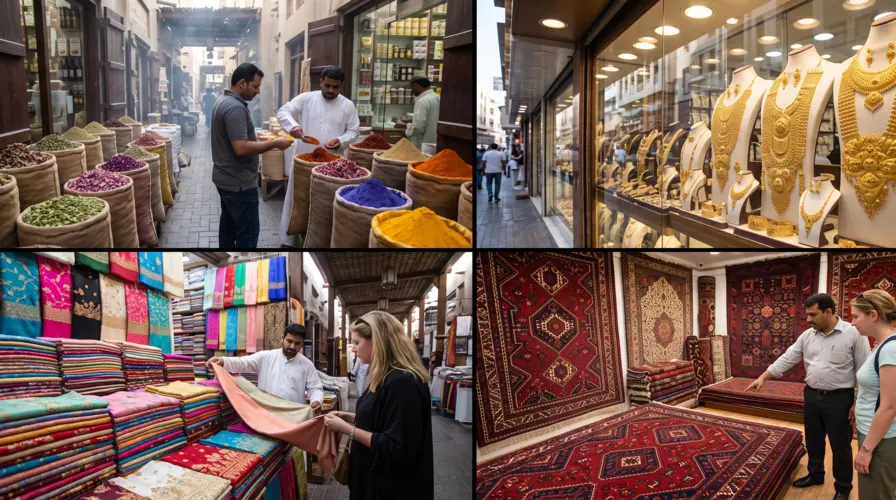
Stepping off the abra on the Deira side hits you immediately with a wall of scent. Sacks of cardamom, dried rose petals, indigo, and frankincense line the narrow, shaded pathways of the Spice Souk Deira. Vendors will aggressively invite you into their stalls. The best time to visit Dubai markets is either early morning right after opening (around 9:00 AM) or late evening when the temperatures drop. If you want high-quality Iranian saffron, do not buy the pre-packaged plastic boxes at the front. Ask to see the premium threads kept in the back, and negotiate hard.
9. Navigate the Gold Souk Dubai Creek
A five-minute walk from the spices brings you to the Gold Souk Dubai Creek. The scale of wealth displayed in these windows defies logic. Massive gold chest plates, intricate bridal jewelry, and thick bullion sit entirely exposed behind glass. The local government strictly regulates the gold quality here, meaning fakes are practically non-existent. When you buy, you pay the daily global market rate for the weight of the gold. You negotiate on the “making charge”—the fee added for the craftsmanship.
10. Shop the Bur Dubai Souk Market
Take the boat back across to the Bur Dubai Souk Market (often called the Old Souk or Textile Souk). The vendors here sell bolts of raw silk, heavy cotton, and embroidered pashminas. If you buy fabric, you will find dozens of master tailors tucked into the side streets who can stitch a custom suit or traditional dishdasha in a matter of days. Expect high-energy sales tactics here; politely say no and keep walking if you aren’t interested.
11. Admire Chuk Palu Afghan Carpets
For those interested in high-end, niche craftsmanship, seek out Chuk Palu Afghan Carpets located within the historic areas. Moving away from mass-produced tourist rugs, this specific entity deals in authentic, hand-knotted Afghan textiles. The raw wool textures and geometric tribal patterns offer a genuine look into central Asian weaving techniques that have flowed through this port for decades.
Where to Eat on Dubai Creek: Street Food to Waterfront Dining
Dining along the creek ranges from 5 AED street-side shawarmas to high-end waterfront dining at Al Seef. The district offers heavily spiced Emirati, Indian, and Levantine flavors you won’t find in the newer commercial centers.
12. Walk the Al Seef District Dubai (Old Meets New)
People frequently ask: Is Al Seef authentic old Dubai? The answer is no. Al Seef District Dubai is a modern waterfront promenade constructed by the developer Meraas. However, the architectural replication is brilliant. The eastern half of the promenade features artificially aged wind towers, rusted metal accents, and cracked plaster to mimic a 1930s fishing village. The western half transitions into sleek, modern glass. The waterfront restaurants here offer spectacular views. Walking this path at sunset is undeniably one of the best things to do in Dubai for couples, offering romantic lighting, quiet corners, and fantastic Levantine cuisine.
13. Eat Street Food with Frying Pan Adventures
If you want to understand where to eat Dubai Creek style, book a walking tour with Street Food Frying Pan Adventures. They bypass the polished restaurants entirely. Instead, expert local guides lead you through the back alleys of Deira and Bur Dubai to eat authentic Palestinian falafel, Indian street snacks, and freshly baked Iranian bread. It provides deep, unfiltered access to the working-class culinary fabric of the city.
14. Drink at Mazmi Coffee Bur Dubai
Located right on the water’s edge in the textile souk, Mazmi Coffee Bur Dubai provides a quiet retreat from the aggressive sales pitches of the market. Founded by an Emirati-Italian couple, the cafe serves excellent specialty coffee and saffron-infused ice cream. Snag a table on the outdoor wooden deck. You can sit inches from the water, watching the massive wooden dhows load cargo bound for Iran and India.
Modern Contrasts: Dubai Creek Harbour
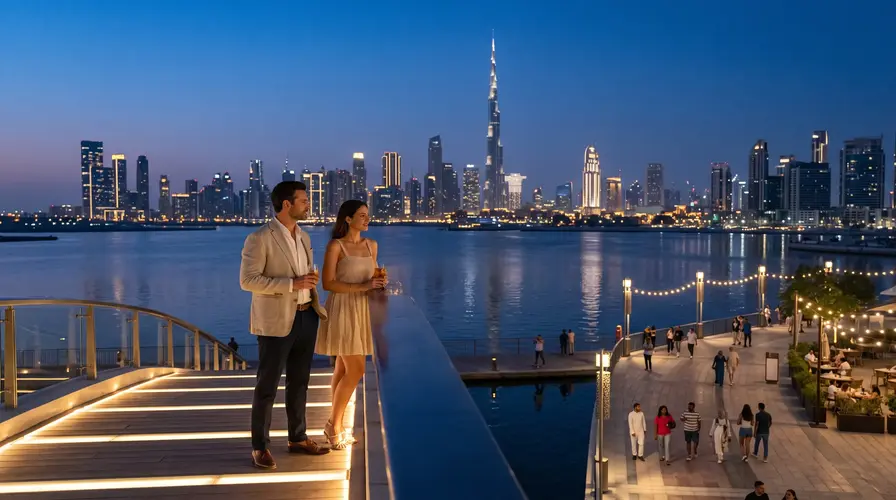
Dubai Creek Harbour is a massive new development located further inland along the water. It offers sweeping, unobstructed views of the Downtown Dubai skyline and the Burj Khalifa at sunset.
15. Discover Things to Do in Dubai Creek Harbour
Do not confuse the old historical creek with Dubai Creek Harbour. The harbour is a master-planned, ultra-modern community built miles down the water. The primary things to do in Dubai Creek Harbour revolve around architecture and dining. Walk out onto “The Viewing Point,” an architectural bridge stretching over the water, for the absolute best panoramic view of the downtown skyline. Grabbing a cocktail at the Vida Creek Harbour hotel as the city lights up ranks high on the list of things to do in Dubai at night. After a quiet evening here, many visitors transition to the other side of town to explore the things to do in Dubai Marina for higher energy nightlife.
Frequently Asked Questions
1. How much is an abra ride in Dubai Creek?
A standard public abra crossing from Bur Dubai to Deira costs exactly 1 AED per person. You pay the driver in cash upon boarding. A private abra rental costs approximately 120 AED per hour for the entire boat.
2. Is Al Seef authentic old Dubai?
No, Al Seef is a modern commercial development designed to replicate historic Emirati architecture. While the buildings are new, the design accurately reflects the region’s traditional coral-stone and wind-tower construction.
3. How long should you spend at Dubai Creek?
You need at least a half-day (4 to 5 hours) to properly experience the area. This gives you enough time to walk the Al Fahidi district, cross the water on an abra, haggle in the gold and spice souks, and eat a meal along the water.
4. Can you walk from the Gold Souk to the Spice Souk?
Yes. The Deira Spice Souk and the Gold Souk sit immediately adjacent to each other. It takes less than five minutes to walk from the spice vendors into the heart of the gold district.