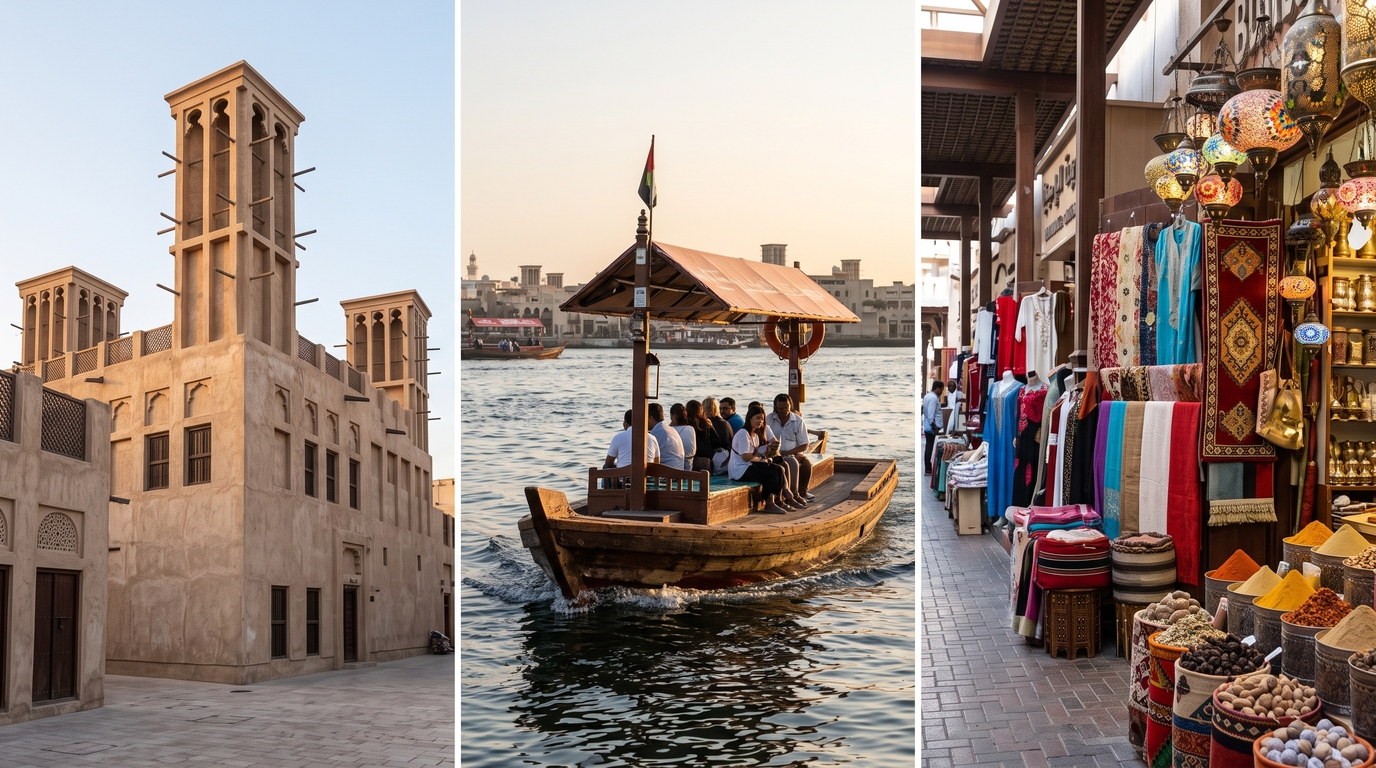
Quick Overview: Bur Dubai is the historic, cultural anchor of the city, sitting squarely on the western banks of Dubai Creek. Unlike the towering glass skyscrapers down south, this district is defined by traditional coral-stone architecture, ancient wind towers, aromatic spice alleys, and heavily traded textile souks. If you want authentic Emirati heritage, ultra-cheap street food, and traditional maritime history, this is your starting point. Finding the most authentic things to do in Dubai means dedicating at least one full day to exploring this historic waterfront.
Historic Sights & Cultural Architecture
1. Walk Through the Al Fahidi Historical Neighbourhood
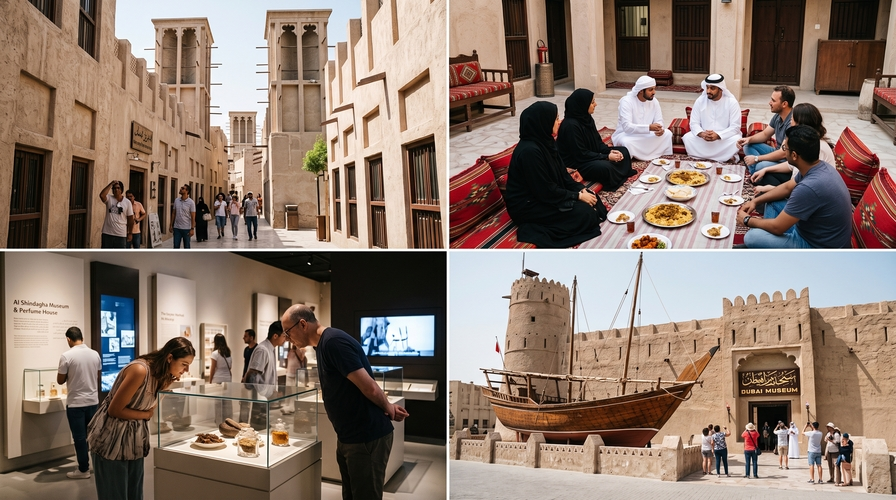
The Al Fahidi Historical Neighbourhood is Dubai’s oldest standing residential quarter, featuring winding, narrow alleyways and traditional courtyard houses made of raw coral stone, gypsum, and palm fronds. The area is entirely free to enter and remains open 24/7.
You leave the modern city behind the second you step into these tight, labyrinthine streets. Al Fahidi was built in the late 19th century by Persian merchants drawn to the city’s relaxed trade tariffs. Look up. You will see the iconic barjeel (traditional wind towers) designed to catch coastal breezes and funnel cool air down into the homes below. Today, these restored buildings house art galleries, boutique cafes, and local craft shops.
Because walking the district requires zero entry fees, it ranks high among the best free things to do in Dubai. If you want a deeper understanding of the area, check the official calendar for the Al Fahidi Historical Neighbourhood to catch seasonal art fairs like Sikka Art Festival.
2. Visit the Sheikh Mohammed Centre for Cultural Understanding (SMCCU)
The SMCCU operates under the philosophy of “Open Doors, Open Minds,” offering tourists a space to sit down with local Emiratis, share a traditional meal, and ask unfiltered questions about local culture, religion, and daily life in the UAE.
Forget reading about culture in a guidebook. The SMCCU gives you a plate of authentic machboos (spiced rice and meat) and invites you to ask anything you want. You sit on traditional Bedouin carpets inside a stunning restored wind-tower house. Local hosts explain the specific nuances of the traditional kandura (men’s white cloak) and abaya (women’s black robe).
They serve breakfast, lunch, and dinner sessions. You must book these heavily attended meals in advance through their website. The food is incredible, but the raw, honest conversations are the actual draw.
3. Explore the Al Shindagha Museum & Perfume House
Al Shindagha Museum is a massive heritage project situated right on the mouth of Dubai Creek. It tells the comprehensive story of the city’s evolution from a small pearl diving village to a global metropolis, utilizing interactive multimedia and historic artifacts.
If you hit a wall with the midday heat and need indoor things to do in Dubai, head straight here. The museum is broken up into multiple pavilions. The absolute standout is the Perfume House. Here, you learn exactly how traditional Emirati fragrances are layered using heavy oud, saffron, and amber. You can physically smell the raw ingredients used for centuries by local families.
The Dubai Creek: Birth of a City pavilion features a high-production cinematic experience detailing the Al Maktoum family’s early days governing the creek’s trade routes. It provides necessary context for everything else you will see in Bur Dubai.
4. Check the Status of Dubai Museum & Al Fahidi Fort
The Dubai Museum, housed inside the historic Al Fahidi Fort (built in 1787), remains closed for major structural renovations as of 2026. The fort itself can still be viewed and photographed from the exterior, but interior exhibitions are inaccessible.
Do not plan your morning around going inside. Many outdated travel blogs still tell tourists to spend two hours walking through the underground dioramas here. You cannot. The city is currently overhauling the entire museum structure to modernize the exhibits. However, you should still walk past it. The fort is the oldest existing building in the city. The massive wooden dhow mounted outside the entrance serves as an excellent photo opportunity.
Traditional Shopping & Street Food
5. Haggle at the Bur Dubai Textile Souk
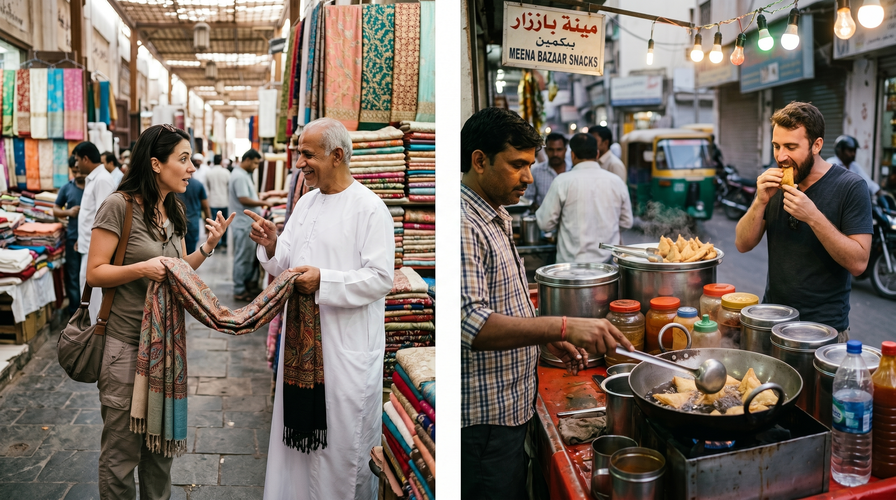
The Bur Dubai Textile Souk is a covered marketplace packed with hundreds of small vendors selling raw silk, cotton, embroidered pashminas, and tailored garments. Haggling is mandatory, and buyers should initially counter with half the quoted price.
The energy here is intense. Vendors will aggressively try to drape fabrics over your shoulder to get your attention. Stand your ground. If you want high-quality cashmere or a custom-tailored suit made in 48 hours, this is where you negotiate.
Timing matters heavily here. Factoring in the best time to visit Dubai means arriving between November and March. Even then, you should hit the souk early in the morning around 9:30 AM or late in the evening when the temperatures drop. Most shops close between 1:00 PM and 4:00 PM for the midday break.
6. Taste Authentic Street Food in Meena Bazaar (Little India Dubai)
Meena Bazaar is a heavily South Asian commercial district located behind the Dubai Museum. It is renowned for 24-hour tailoring shops, heavy gold jewelry, and incredibly cheap, authentic Indian street food, particularly samosas and chaat.
You do not come to Meena Bazaar for high-end dining. You come for chaos, noise, and incredible flavor. The streets smell like frying oil, cardamom, and fresh jasmine flowers. Grab a hot, crispy potato samosa from a corner cafeteria for less than 2 AED. Drink a tiny paper cup of heavily sugared karak chai (strong tea).
It feels like a completely different country compared to the slick, modern side of the city. Navigate the crowds, look at the staggering window displays of 22-karat gold, and eat dinner at a local institution like Rangoli for massive vegetarian thalis that cost a fraction of hotel restaurant prices.
Dubai Creek & Waterfront Experiences
7. Take a Traditional 1-Dirham Dubai Creek Abra Ride
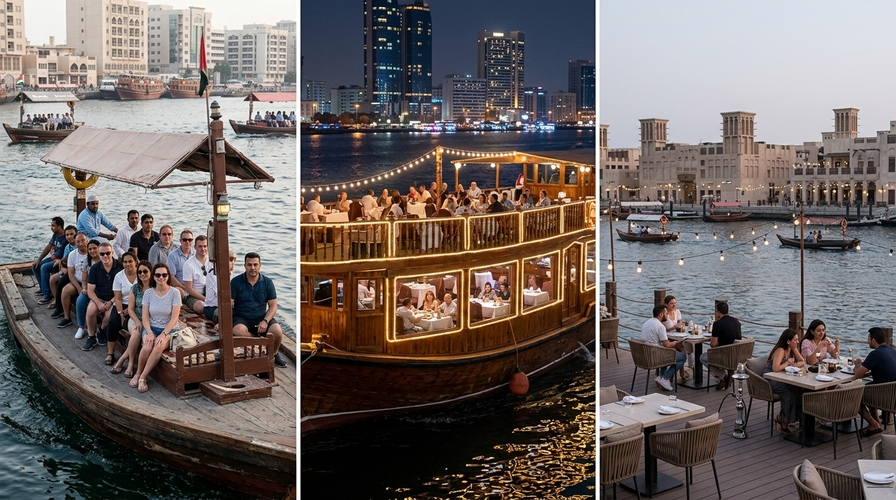
Taking a Dubai Creek abra ride costs exactly 1 AED per person. These traditional wooden motorized boats ferry dozens of passengers across the water from Bur Dubai to Deira in about five minutes.
No tickets. No advanced booking. You walk up to the Bur Dubai Abra Station, step onto the wooden deck of the boat, sit on the central bench, and hand a physical one-dirham coin directly to the driver.
The boats run constantly. The smell of diesel engines mixing with the saltwater of the creek is the defining scent of Old Dubai. Watching the heavy cargo dhows load up flat-screen TVs and refrigerators bound for Iran or India is a visual spectacle. It is rugged, loud, and surprisingly romantic at sunset, easily making it one of the most authentic things to do in Dubai for couples.
8. Book a Dhow Cruise Dubai Creek with Dinner
A traditional Dhow dinner cruise offers a two-hour slow float down Dubai Creek on a massive, illuminated wooden boat. Tickets typically include a buffet dinner, unlimited soft drinks, and live entertainment like Tanoura dancing.
When the sun goes down, the Creek transforms. The wooden dhows light up with bright neon trims and blast music over the water. It is a highly popular, budget-friendly option for tourists looking for things to do in Dubai at night.
However, if you dislike heavy crowds or buffet-style food, you might want an upgrade. While a shared dhow is great for budget travelers, booking a private boat charter Dubai gives you total control over the itinerary, the menu, and the privacy of your own deck.
9. Dine by the Water at Al Seef Creekside
Al Seef is a 1.8-kilometer waterfront promenade designed to seamlessly blend traditional mud-brick heritage architecture on one end with sleek, modern glass pavilions on the other. It hosts dozens of waterfront cafes and boutique shops.
This is the cleanest, most curated version of Old Dubai. The developers artificially aged the walls to look perfectly weathered, complete with rusted vintage signs and retro light fixtures. It provides the aesthetic of the 1950s with the hygiene and air-conditioning of the 2020s.
Sit at a table right on the water’s edge. Order a shisha, watch the abras cross the creek, and enjoy the breeze. If you are specifically hunting for premium things to do in Dubai Creek Harbour, Al Seef acts as the perfect modern gateway. Alternatively, if you want a premium culinary experience directly on the water rather than beside it, reserving a specialized yacht dinner Dubai experience offers a massive step up from standard promenade cafes.
Parks, Modern Sights & Port Rashid
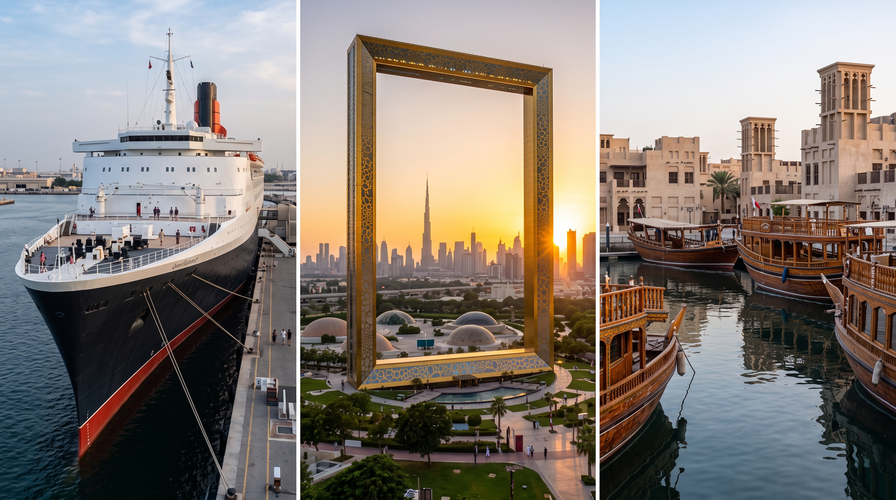
10. Step Aboard the Queen Elizabeth 2 (QE2)
The QE2 is a legendary British ocean liner permanently docked at Port Rashid in Bur Dubai. It now operates as a floating hotel, heritage museum, and dining destination, preserving the ship’s 1960s maritime legacy.
This ship crossed the Atlantic 812 times before retiring. Now, she rests quietly in Dubai. You do not need to book a room to board her. You can book a heritage tour to walk the original decks, view the vintage cabin classes, and eat fish and chips at the Golden Lion pub inside.
Dubai’s relationship with the water has shifted dramatically. What started with pearl diving dhows evolved into welcoming massive ocean liners like the QE2, and now centers around sleek, modern luxury. Taking a modern yacht tour Dubai out of the Marina shows you exactly where the city’s maritime ambitions went next.
11. Capture Sunset Views at Dubai Frame & Zabeel Park
The Dubai Frame is a 150-meter-tall golden architectural landmark located inside Zabeel Park. It visually frames the historic districts of Bur Dubai and Deira on one side, and the modern skyline of Downtown Dubai on the other.
Zabeel Park borders the edge of Bur Dubai. It is massive, incredibly green, and requires a 5 AED entry fee. Right in the center stands the Frame. You take an elevator to the top bridge, which features a terrifying smart-glass floor that turns completely transparent when you step on it.
Looking north, you see the low-rise buildings and chaotic charm of Bur Dubai. Look south, and the Burj Khalifa dominates the view. The park below is packed with playgrounds and barbecue spots, making it a mandatory stop if you are mapping out things to do in Dubai with kids.
12. Tour the Al Boom Tourist Village
Al Boom Tourist Village is a stylized heritage site located near Creek Park, featuring traditional architecture, large banquet halls, a private marina, and ornate wooden dhows used for private events and dinner cruises.
This is a deeper cut for tourists. Most standard itineraries skip it, but Al Boom holds serious cultural weight for local Emiratis. It is primarily used for massive local weddings and corporate banquets. However, the architecture is stunning, and seeing the massive dhows docked at their private marina offers a quiet, uncrowded alternative to the heavy foot traffic of Al Seef.
Old Dubai vs New Dubai: What’s the Difference?
Understanding where to spend your time requires understanding the stark divide in the city’s layout. Bur Dubai represents the past, while the Marina and Downtown represent the future.
| Feature | Bur Dubai (Old Dubai) | Dubai Marina / Downtown (New Dubai) |
| Vibe & Atmosphere | Chaotic, historic, dense, heavily cultural. | Polished, luxurious, high-tech, spacious. |
| Average Costs | Highly budget-friendly (1 AED transit, cheap food). | Premium pricing (High-end dining, luxury transit). |
| Primary Transport | Walking, Dubai Metro, Abras (Water Taxis). | Taxis, Metro, Private Yacht Charters. |
| Best Suited For | Culture seekers, street food fans, bargain shoppers. | Nightlife lovers, luxury travelers, beachgoers. |
| Architecture | Low-rise coral stone, wind towers, busy souks. | Massive glass skyscrapers, master-planned islands. |
Frequently Asked Questions (FAQ)
How do you get from Bur Dubai to Deira crossing?
The fastest and cheapest way to get from Bur Dubai to Deira is by taking a traditional motorized abra across Dubai Creek. Go to the Bur Dubai Abra Station, board the wooden boat, and pay the driver 1 AED in cash. The ride takes exactly five minutes and drops you off at the Deira Old Souk Abra Station.
Is Bur Dubai worth visiting for tourists?
Yes, Bur Dubai is absolutely worth visiting for tourists who want to experience the authentic, historical roots of the city. It offers affordable street food, traditional markets, cultural museums, and heritage architecture that you cannot find anywhere else in the modern sectors of Dubai.
How to get from Bur Dubai to Dubai Marina?
To get from Bur Dubai to Dubai Marina, take the Dubai Metro Red Line from BurJuman Station directly south to Sobha Realty or DMCC Metro Station. The trip takes roughly 35 minutes. Once in the Marina, you can transition from historic abras to premium maritime experiences like a high-end palm boat tour Dubai.